Before you begin: Use your RV and component manuals for model-specific procedures. Stop and use a qualified professional for electrical, propane, structural, or other work beyond your training.
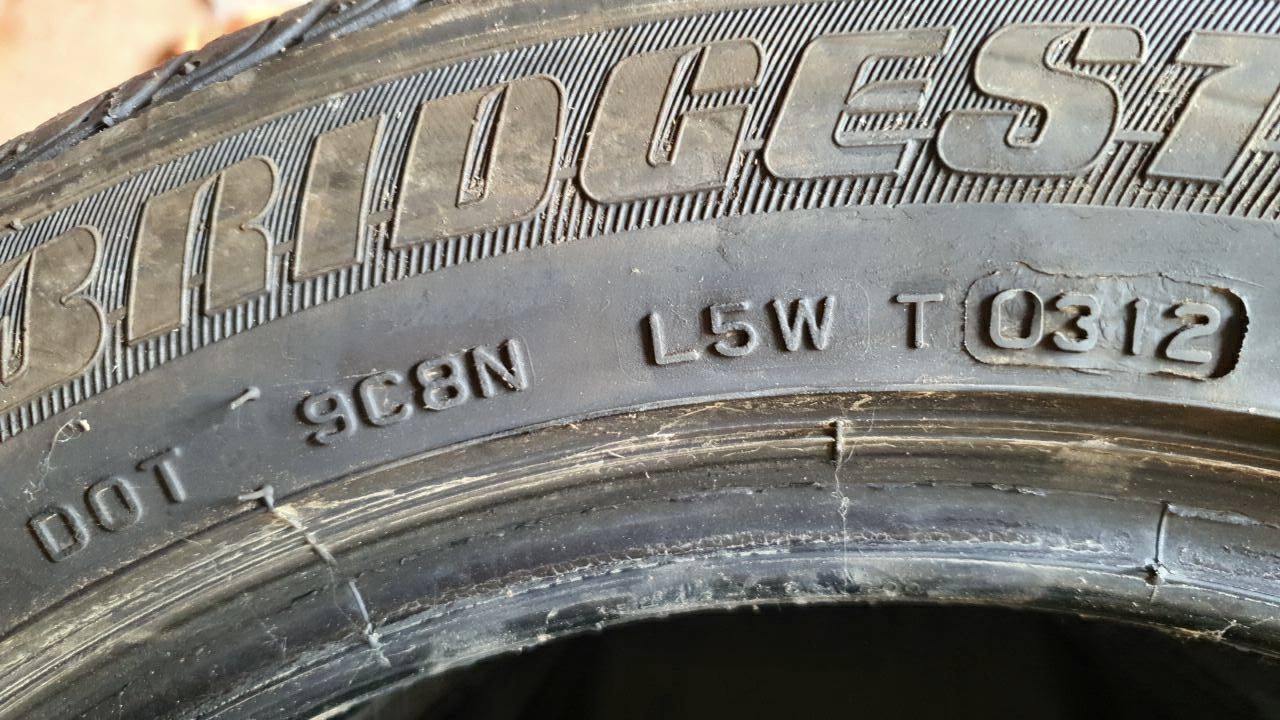

Find the full date code
Look for the DOT Tire Identification Number on a tire sidewall. The last four digits identify the week and year of manufacture: for example, 2423 means week 24 of 2023. The full date code may appear on only one sidewall, so check both sides without reaching under an unsupported RV.
Record the code for every tire, including the spare if fitted. If the code is hidden or unreadable, ask a tire professional to inspect it safely. The manufacture date is not the installation date.
Why age matters even when tread looks good
RV tires can accumulate age while the vehicle is parked and the tread still looks usable. NHTSA specifically flags recreational vehicles and other low-mileage vehicles as cases where tire aging can be overlooked. Heat, sunlight, storage, and maintenance affect service life.
A date code is one input, not a universal expiration date. NHTSA notes that some vehicle and tire makers recommend replacing tires between six and ten years old regardless of treadwear. Follow the guidance for your RV and tire, and get a professional assessment when the history is uncertain.
Inspect pressure, tread, and damage
Check cold inflation pressure with a gauge using the value appropriate to your RV and load, rather than the sidewall maximum alone. Look for cuts, cracks, bulges, uneven wear, embedded objects, and signs of repeated air loss. Inspect the spare too.
A tire can be unsafe before it reaches an age threshold. Do not drive on a tire with a bulge, exposed cords, serious damage, or unexplained pressure loss; consult a tire professional.
Keep a tire record you can act on
Write down the date code, tire brand and model, size and load rating, position on the RV, installation date if known, pressure specification, inspection date, and any service recommendation. Keep a clear photograph of each code if you can take one safely.
Compare the record with tire manufacturer guidance, your RV manual, and any applicable recall. Before a long trip, resolve damage or age questions with a qualified tire shop rather than assuming a visual check is enough.
What this guide does not decide
It cannot set a replacement date for your exact tires without their make, model, use, storage, and inspection history. It also does not replace a tire professional’s assessment of load rating, wheel condition, or damage. Use the linked NHTSA resource to understand the date code and basic checks, then follow the applicable manufacturer guidance.
Manufacturer manuals & further reading
Use these official resources to find details for your equipment. Match the brand, model, and revision; another RV’s procedure may not apply to yours.
- NHTSA tire safety and maintenance
Understand tire labels, inflation checks, damage, and aging. Your RV and tire specifications determine the appropriate load and inflation requirements.
Keep a record: Record your tire checks →
This guide is general educational information, not a substitute for your RV’s manuals or professional inspection.